A trip that inspires · Natural wonders
Salar de Uyuni
Walk across the sky, on the largest salt desert on the planet.
Walk across the sky, on the largest salt desert on the planet.
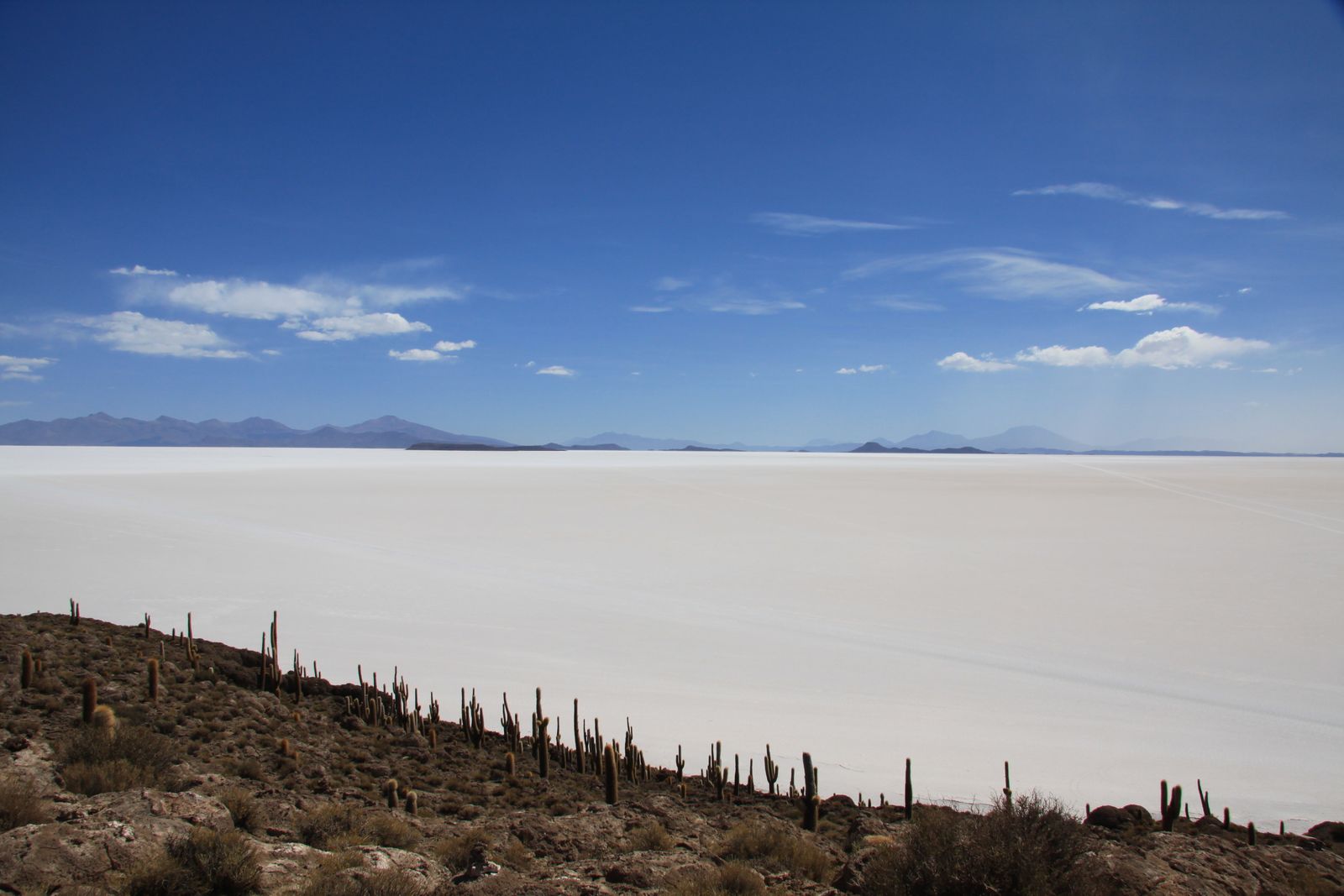
The Salar de Uyuni, in southwestern Bolivia, is the largest salt flat in the world: more than 10,000 square kilometers of endless white that, between December and April, turn into the most photographed natural mirror in South America. This guide brings together when to go, how much to budget, the three-day route that links the salt flat with the Eduardo Avaroa Reserve, and where to sleep on each leg.
The journey begins in tiny Uyuni, crosses the white plain to Incahuasi Island —an outcrop of giant cacti in the middle of nowhere— and ends on the red altiplano of Laguna Colorada, among flamingos, steaming geysers and volcanoes over 5,000 meters high. It's a trip of contrasts: salt, fire and water on a single horizon.
| Level | Per person / day | What it includes |
|---|---|---|
| Backpacker | USD 35–45 | Shared 3D/2N tour in a 4x4, simple hostel, basic meals included in the tour |
| Mid-range | USD 60–90 | Shared tour with a higher-end operator, boutique hotel in Uyuni, full meals |
| Premium | USD 150–250+ | Private 4x4 tour, salt hotel or exclusive lodge, dedicated guide and private transfers |
Budget on the ground, per person, excluding international flights.
The classic route leaves Uyuni in a shared or private 4x4 and moves from white to red: first the salt flat, then the volcanic altiplano of southern Bolivia.
 First stop
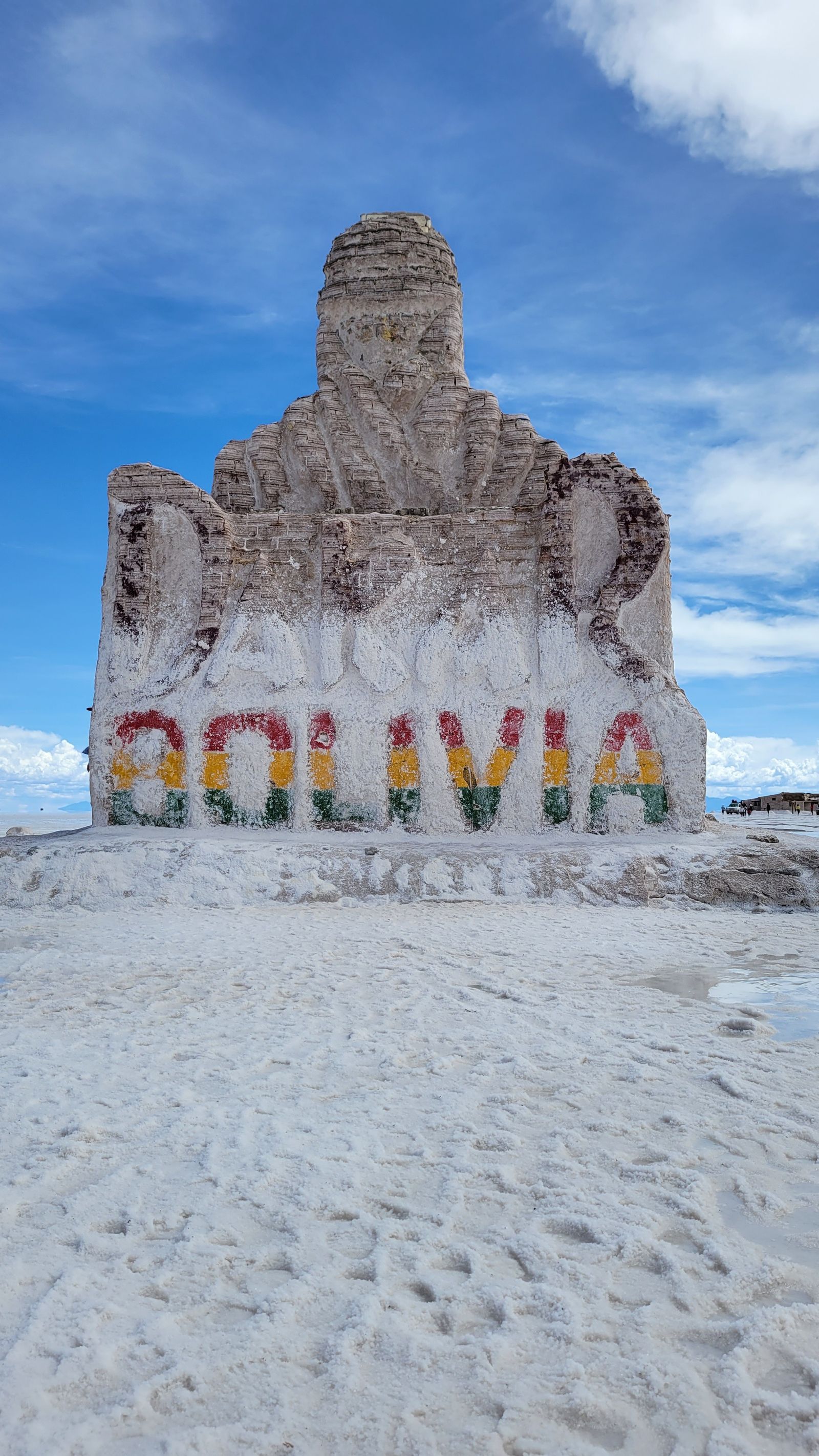
It all begins in this small altiplano town, at 3,700 meters above sea level, where the 4x4s are readied each morning to cross the white nothingness. Before entering the salt flat, most tours stop at the Train Cemetery, a cluster of rusted 19th-century locomotives abandoned in the middle of the desert, and at Colchani, the salt-mining village where salt is extracted and processed by hand.
 Second stop
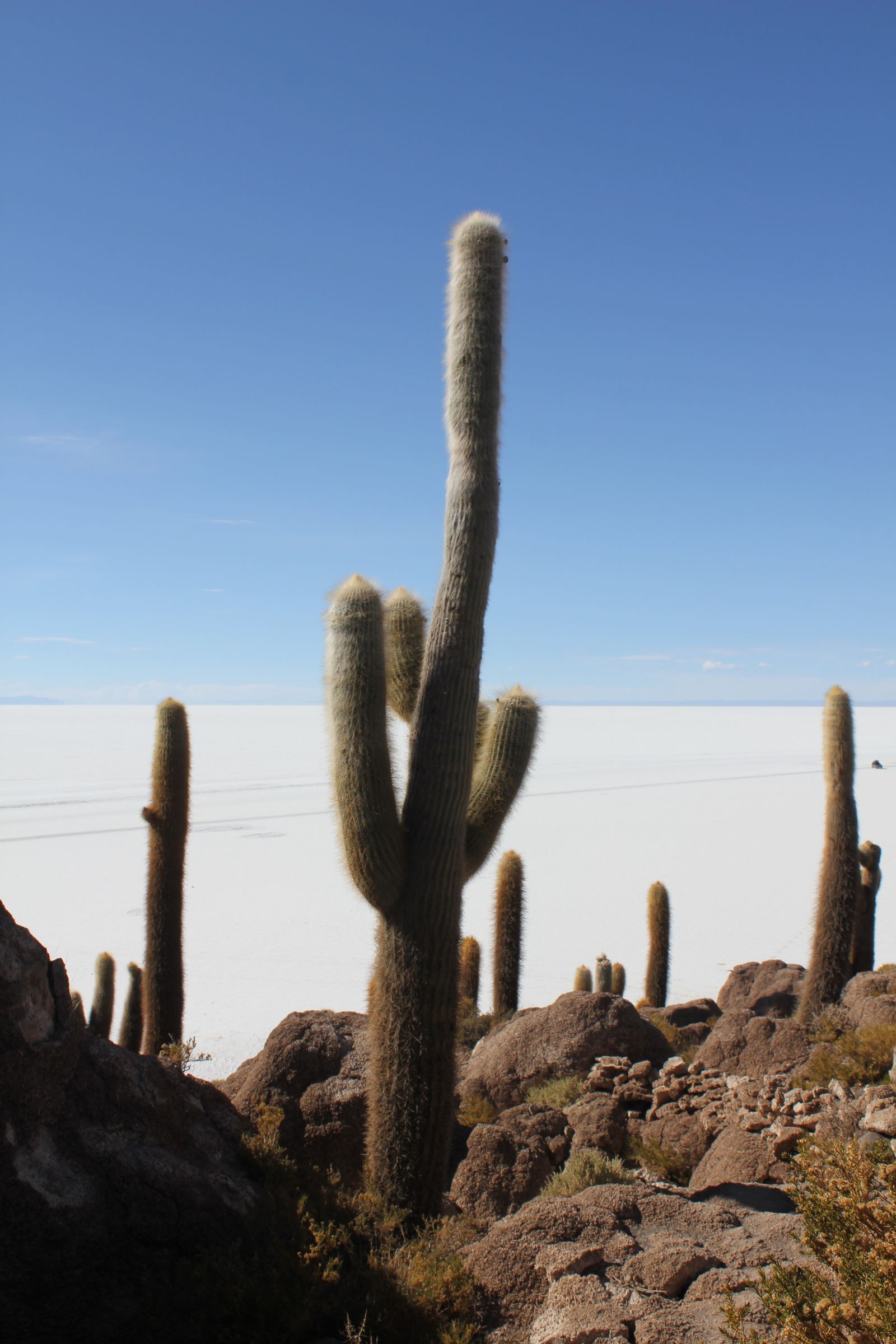
In the middle of the absolute white, a small island of volcanic rock appears, covered in giant cacti more than ten meters tall, some over 900 years old. Walking among them, with the salt flat stretching without limit in every direction, is the most photographed moment of the trip. In the rainy season, a thin layer of water turns the entire surface into a perfect mirror that erases the horizon.
 Third stop
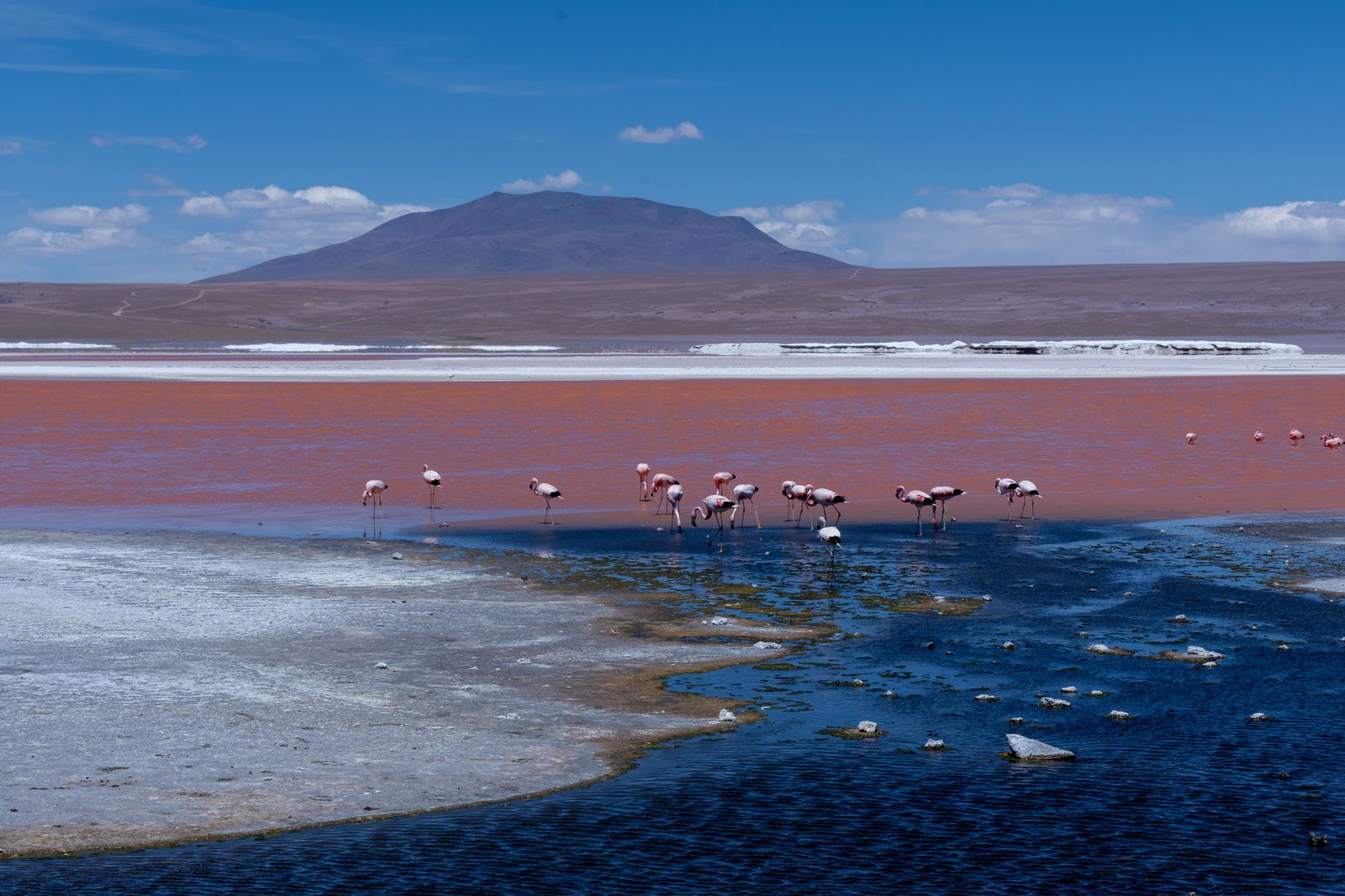
Inside the Eduardo Avaroa Andean Fauna National Reserve, at over 4,500 meters, the landscape changes completely: a lagoon dyed red by microscopic algae, home to thousands of Andean flamingos silhouetted against snow-capped volcanoes. It's one of the most singular high-altitude ecosystems in South America, and the contrast with the white of the salt flat is what makes this second half of the trip unforgettable.