A trip that inspires · Natural phenomena
Cherry Blossoms in Japan
Chase the pink wave that sweeps across Japan from south to north, a brief and perfect embrace of spring.
Chase the pink wave that sweeps across Japan from south to north, a brief and perfect embrace of spring.
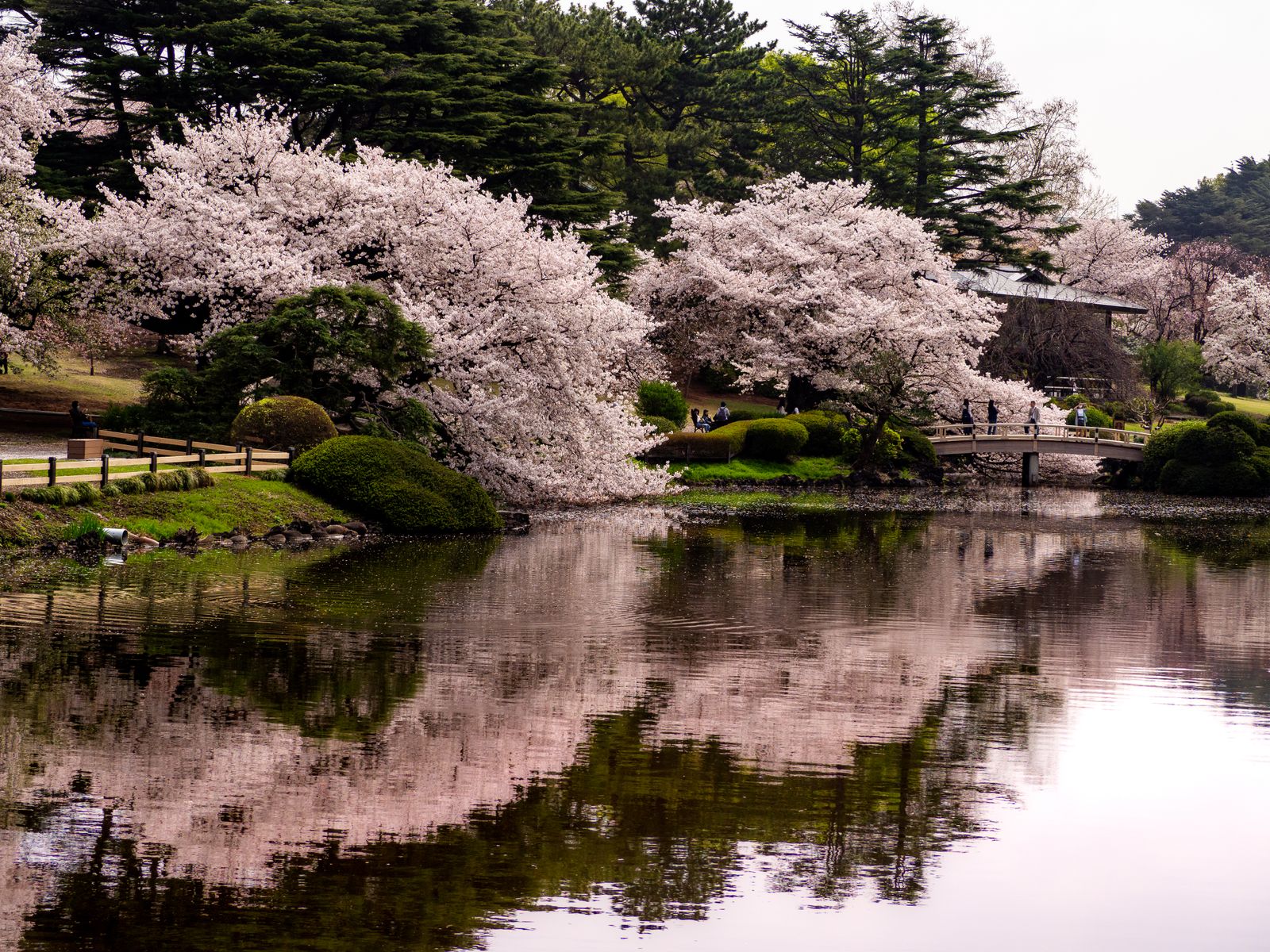
Seeing the sakura in Japan means witnessing one of the most fleeting scenes on the planet: for barely two weeks, between late March and early April, cherry trees cover Tokyo, Kyoto and Osaka in a pale pink that appears and vanishes almost as quickly. This guide brings together the best time for hanami, the daily budget for your travel style, a ten-day route through the three cities and where to stay so you don't miss a single petal.
Each stop has its own ritual: Tokyo celebrates the sakura among skyscrapers and city parks, Kyoto wraps it in wooden temples and centuries-old canals, and Osaka lives it with the easy informality of its markets and its castle. It's a trip of soft contrasts, where nature sets the pace and every day brings a different postcard beneath the very same trees.
| Level | Per person / day | What it includes |
|---|---|---|
| Backpacker | USD 60–80 | Hostels or capsule hotels, travel on a regional pass, konbini meals and neighborhood ramen-ya. |
| Mid-range | USD 130–180 | Business hotel or simple ryokan, JR Pass, varied dining and izakayas with a reservation. |
| Premium | USD 300 or more | Luxury ryokan with private onsen, shinkansen in green class, kaiseki dinners and exclusive experiences. |
On-the-ground budget, per person, excluding international flights.
The cherry blossom wave moves from east to west with just a few days' difference between cities, so it's best to travel in that same direction and leave room to adapt to the bloom forecast.
 First stop
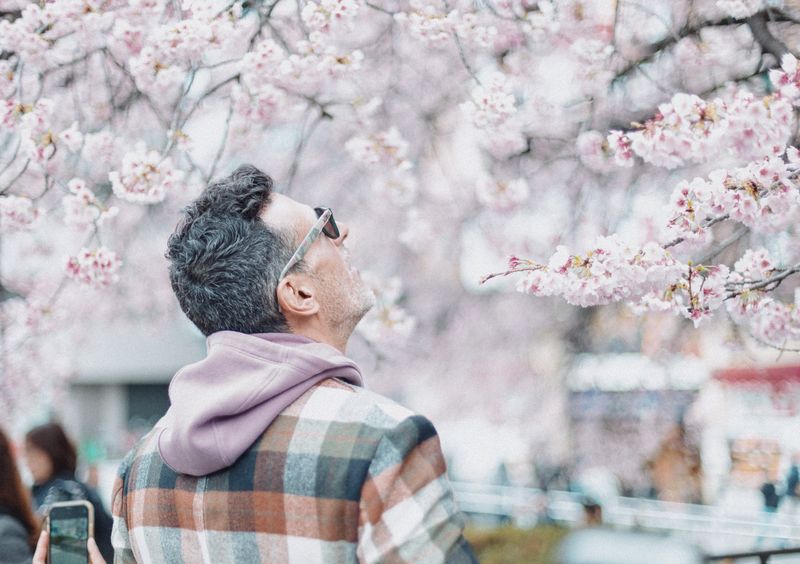
In Tokyo the sakura shares the stage with glass and steel without losing the spotlight: just walk along the Imperial Palace moat or cross the bridge in Nakameguro to watch the whole city take a pause. Families set up their hanami with tarps and bento boxes in Ueno from early morning, while at Shinjuku Gyoen the mood is quieter and more contemplative. At night, the illuminated cherry trees of Chidorigafuchi offer a completely different version of the same tree.
 Second stop
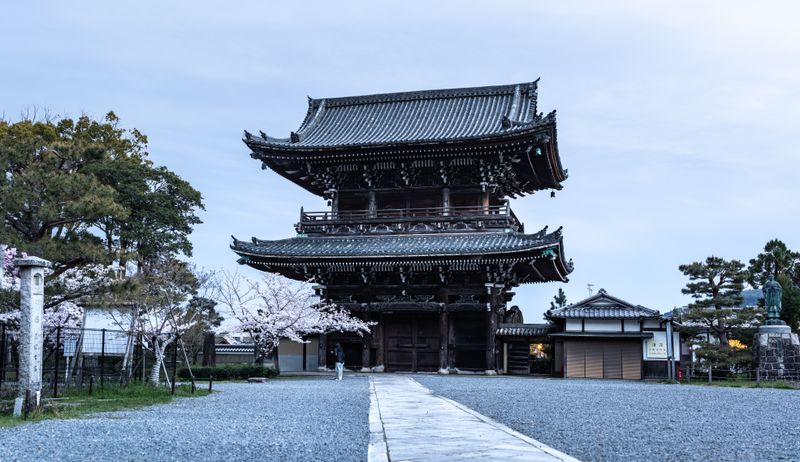
Kyoto turns hanami into something almost ceremonial. The Philosopher's Path is blanketed with petals that fall onto the canal, Nijo Castle frames its gardens with centuries-old trees, and the Kamo River fills with people who simply sit down to watch. A getaway to Nara, less than an hour away by train, adds temples, tame deer and more cherry blossoms in an even more unhurried setting.
 Third stop
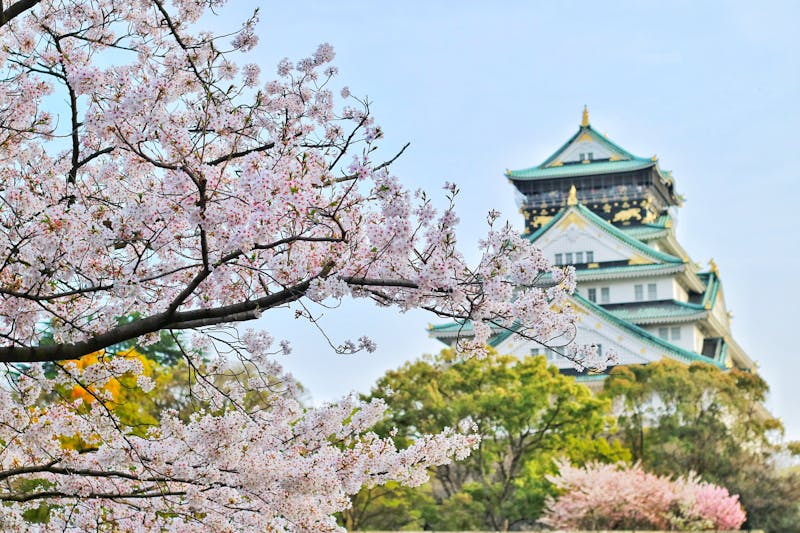
Osaka lives the sakura with less solemnity and more appetite: the castle park fills with impromptu picnics and music, while the Okawa River is best explored on small boats beneath branches heavy with blossoms. It's also the perfect city to close the trip eating takoyaki and okonomiyaki in Dotonbori, with the canals reflecting the neon signs at night.
Each city has its ideal base. These links take you straight to the accommodation search for that exact place:
All the essentials of your trip, sorted with our trusted partners: