A trip that inspires · Iconic routes
The Silk Road
Walk the caravan route, among bazaars, turquoise domes and endless steppe.
Walk the caravan route, among bazaars, turquoise domes and endless steppe.
Traveling the Silk Road across Central Asia is like crossing the line between what you read in history books and what you can still reach out and touch: the blue majolica domes of Samarkand, the trading passes that once linked China to Persia, and the steppes of Kazakhstan and Kyrgyzstan where caravans rested before pressing on. This guide brings together the best time to go, a budget for every travel style, a reference route through Uzbekistan, Kazakhstan and Kyrgyzstan, and where to stay at each stop.
The journey feels different on every leg: in Uzbekistan it's all about the architecture and the buzz of the bazaars; in Kazakhstan, the urban scale of Almaty against the backdrop of the Tian Shan mountains; in Kyrgyzstan, the quiet of the high pastures and yurt camps beside mountain lakes. It's an itinerary for travelers who move with a curiosity for history and a longing to photograph landscapes that rarely make it onto the usual postcards.
| Level | Per person / day | What it includes |
|---|---|---|
| Backpacker | USD 25–35 | Hostels and family guesthouses, trains and shared marshrutkas, street food (plov, shashlik, laghman) |
| Mid-range | USD 60–90 | Boutique hotels in restored madrasas, half-day local guides, private transfers between cities |
| Premium | USD 150+ | Signature hotels, a private driver for the whole route, exclusive dinners and artisan workshops |
Budget on the ground, per person, excluding international flights.
The logic of the route follows the historic path of the caravans: you enter through Uzbekistan, where the heritage is most concentrated, and move north and east toward the mountains of Kazakhstan and Kyrgyzstan.
 First stop
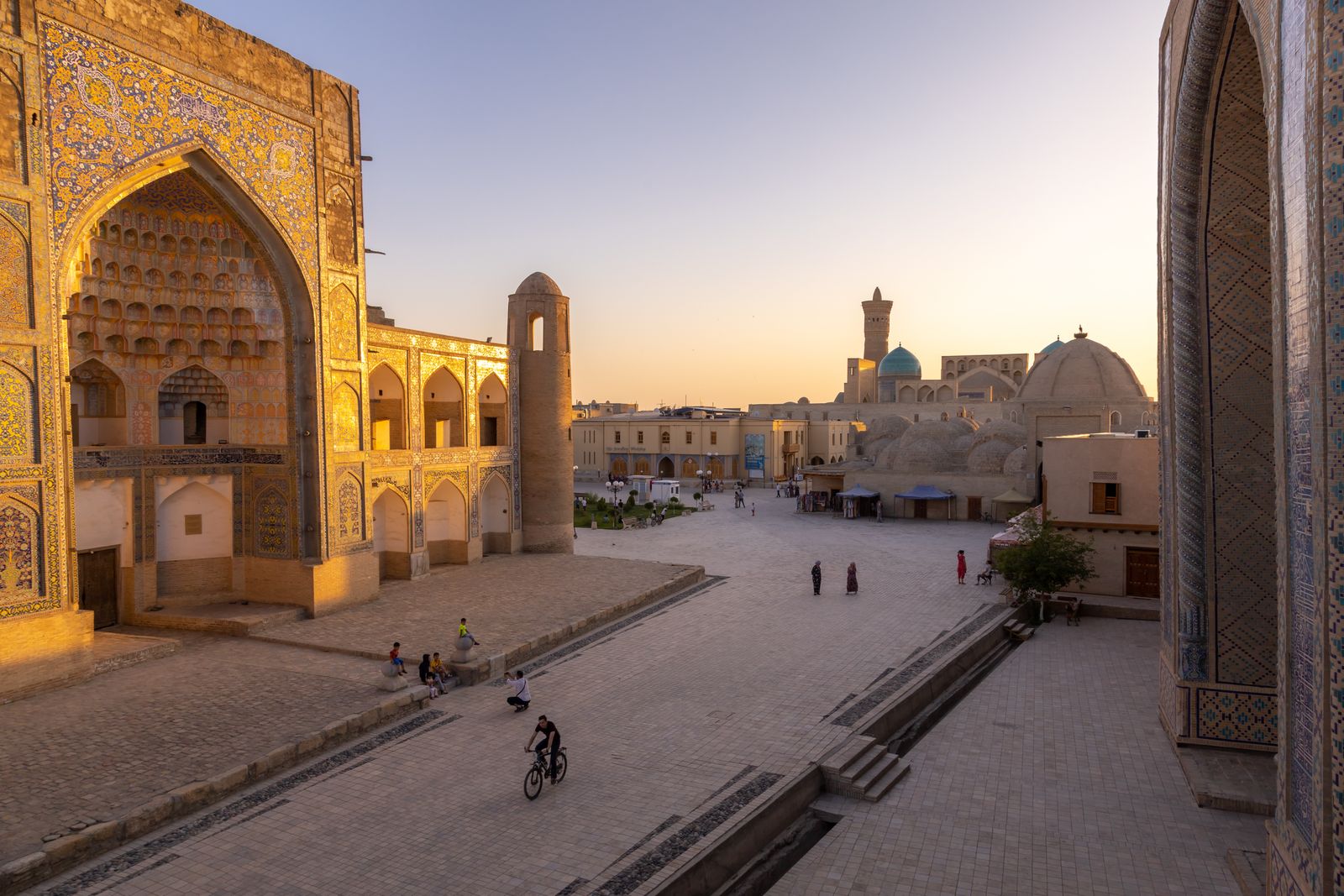
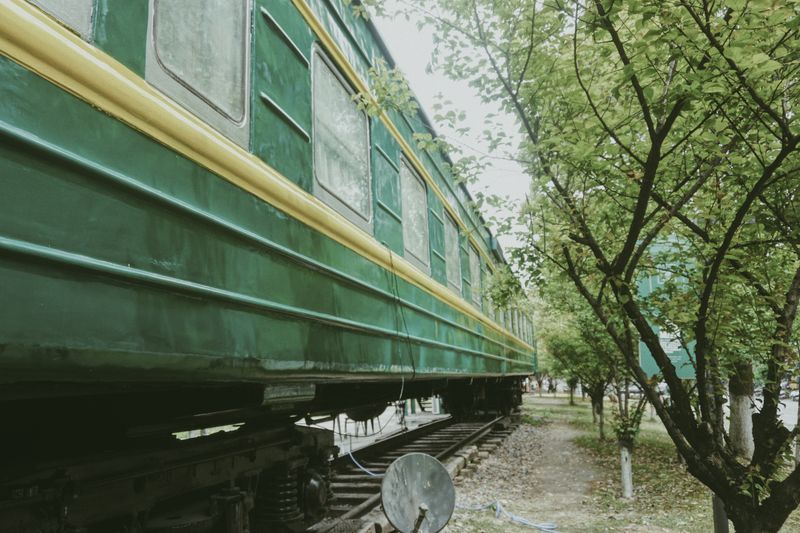
Uzbekistan holds everything most people picture when they think of the Silk Road: the Registan square in Samarkand, with its three facing madrasas and turquoise mosaics that shift tone as the daylight moves, and Bukhara, a living museum of a city where you can still buy a hand-woven carpet in the very workshop that made it. Between the two, the Afrosiyob train crosses the desert in just over an hour and a half, linking two capitals that were commercial rivals for centuries.
 Second stop
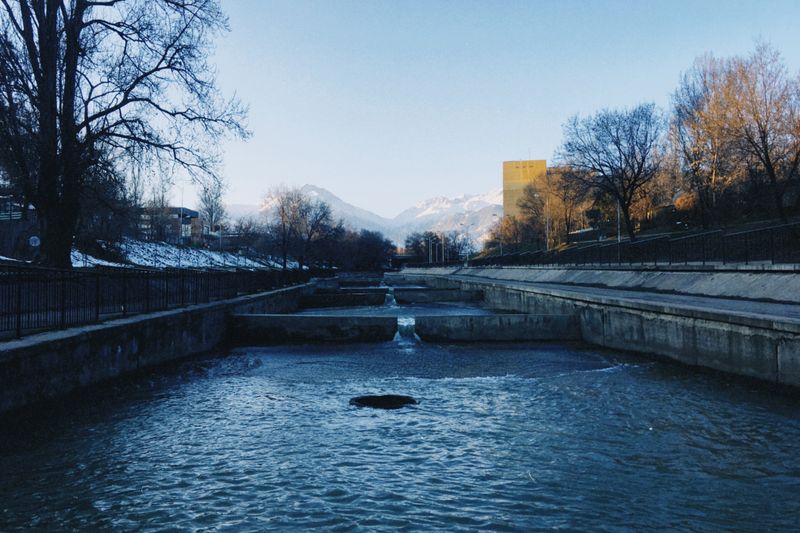
Almaty breaks the rhythm of the trip: a modern city of specialty cafés and tree-lined parks, hemmed in against the Tian Shan mountains. It was a secondary stop on the historic route, but today it's the best logistical bridge between Uzbekistan and Kyrgyzstan — and the perfect excuse for a day trip to Charyn Canyon, a miniature version of the Grand Canyon less than three hours from the city.
 Third stop
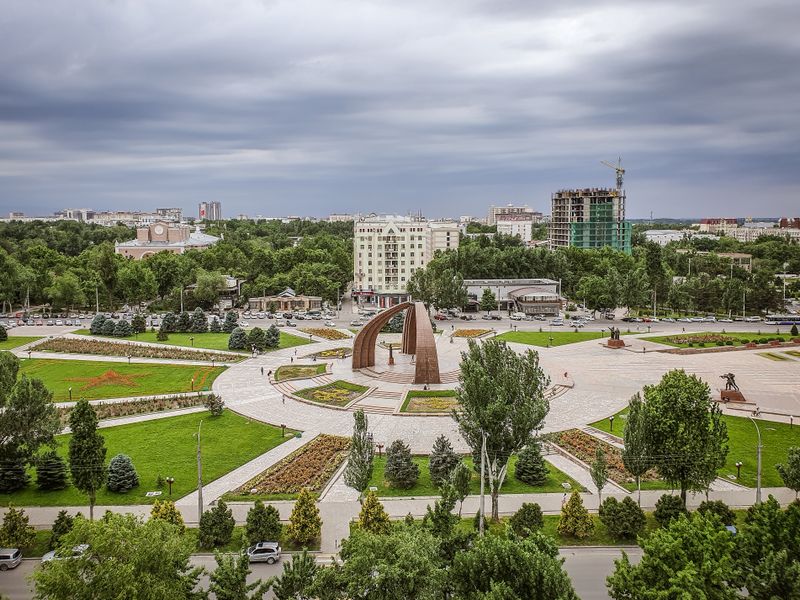
Kyrgyzstan is the natural counterpoint of the journey: fewer monuments, more landscape. Bishkek is a calm city you pass through quickly, but the real draw is Lake Issyk-Kul, one of the largest mountain lakes in the world, ringed by valleys where nomadic herding is still very much alive. Sleeping in a yurt camp by the water, with tea and freshly baked bread, is the most honest way to close out a trip along the route.