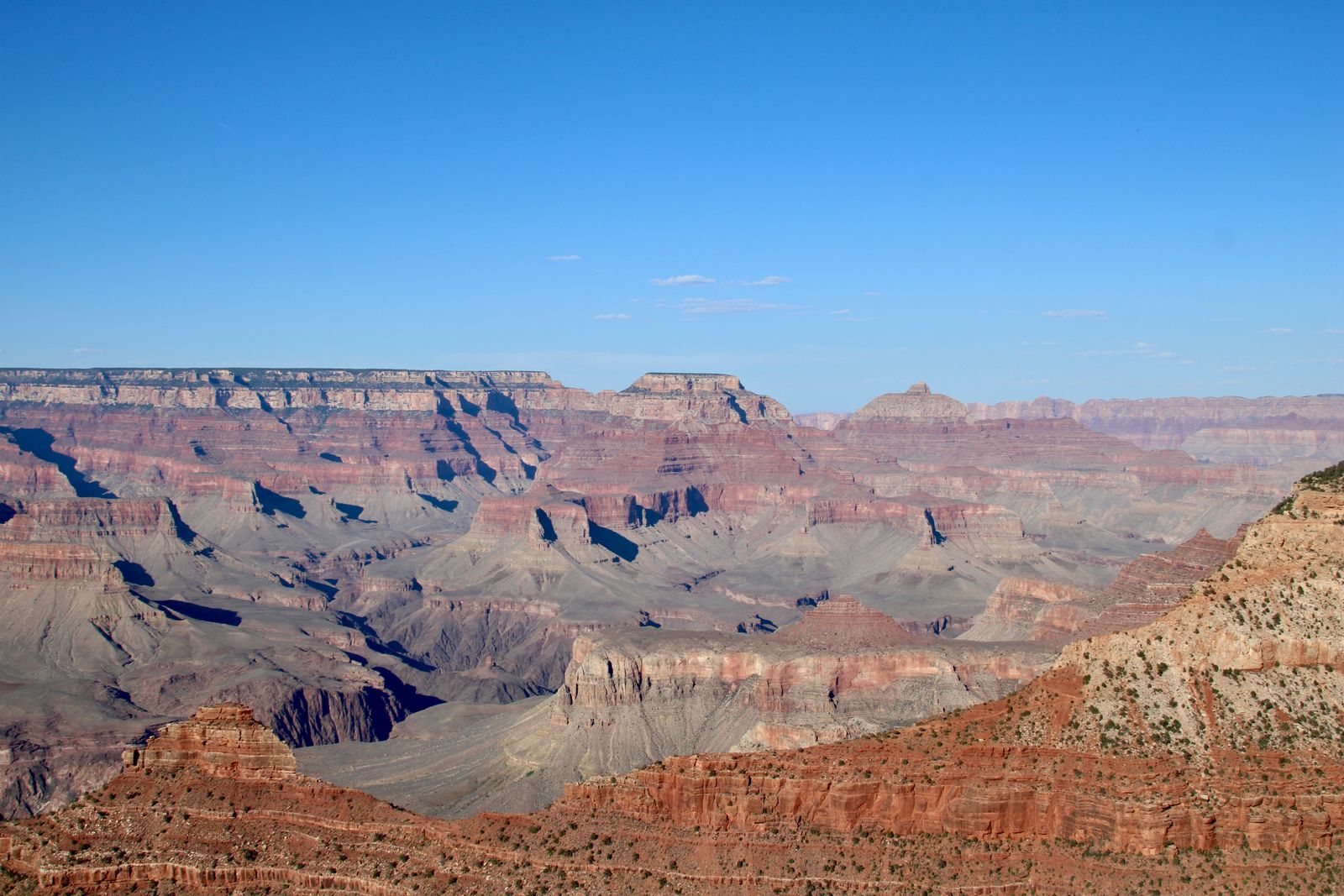
A trip that inspires · Iconic road trips
Route 66
The Mother Road that crosses the United States coast to coast, through neon, desert and ocean.
The Mother Road that crosses the United States coast to coast, through neon, desert and ocean.
Driving Route 66 is the most famous road trip in the United States: nearly 2,450 miles of asphalt linking Chicago to Santa Monica, crossing eight states, vintage neon towns and landscapes that shift from the cornfields of Illinois to the deserts of New Mexico and Arizona. The best time to drive it runs from May to September, once the northern snow has melted and the extreme desert heat is still manageable. This guide covers when to go, how much to budget, the route day by day and where to sleep along the way.
Every stretch has its own character: the neon-sign motels of Illinois and Missouri, the endless plains of Oklahoma and Texas, the red mesas and Native American towns of New Mexico and Arizona, and the final leg that cuts across the Mojave Desert to reach the Santa Monica Pier, where a sign officially marks the end of the road facing the Pacific.
| Level | Per person / day | What it includes |
|---|---|---|
| Backpacker | USD 60 | Budget motels or camping, meals at roadside diners, no paid activities |
| Mid-range | USD 130 | Vintage motels with retro flair, varied meals and the odd attraction or museum along the way |
| Premium | USD 280 | Boutique hotels or resorts, chef-driven restaurants and guided tours on the key stretches |
Budget on the ground, per person, excluding international flights. It doesn't include the car rental, which is best booked separately.
The classic route runs east to west, from Chicago to Santa Monica, crossing Illinois, Missouri, Kansas, Oklahoma, Texas, New Mexico, Arizona and California. This itinerary breaks the road into legs of three to four hours of driving per day, with time to stop in the iconic towns.
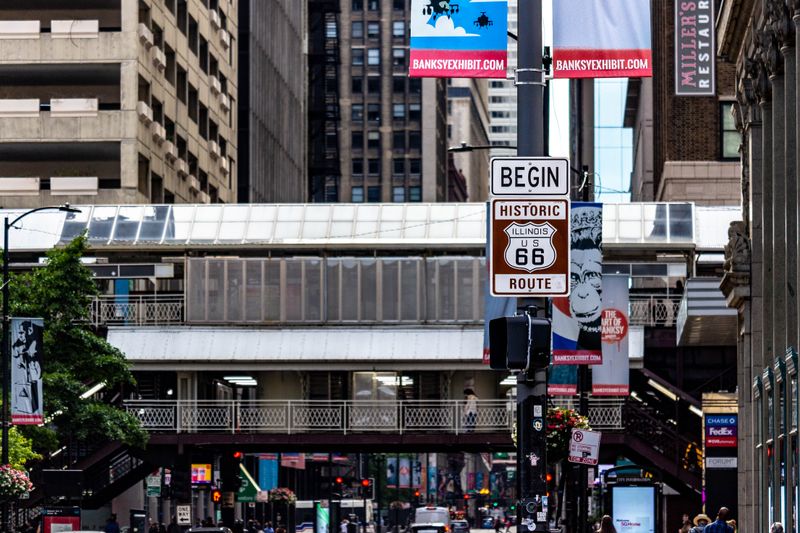 First stop
Every Route 66 road tripper passes the blue Adams Street sign, right in the Loop, before leaving the city. Chicago is the perfect prologue: skyscrapers, Lake Michigan and a food scene worth exploring before you get in the car, from deep-dish pizza to the corner hot dogs that are almost a rite of passage.
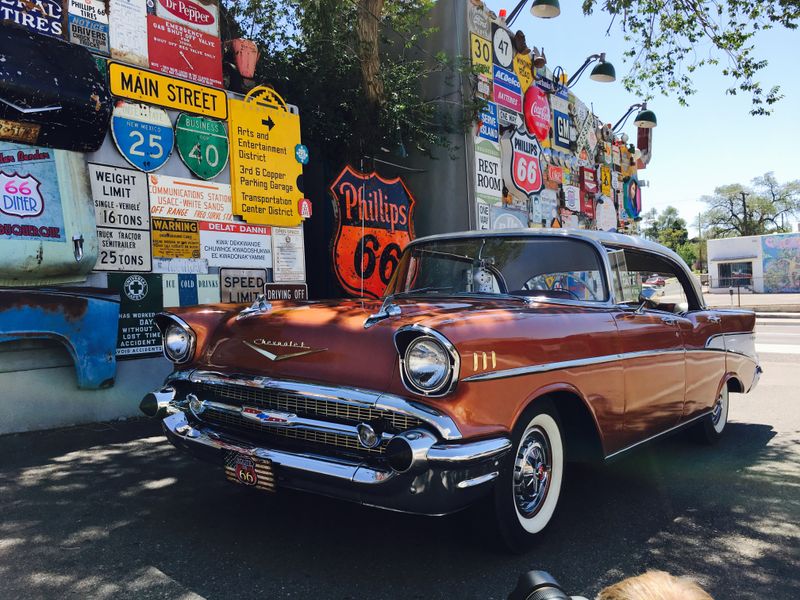 Second stop
New Mexico marks the route's turn toward the landscape everyone pictures when they think of American highways: red mesas, huge skies and towns with Indigenous and Spanish roots that feel different from anything you've driven through before. Albuquerque preserves one of the best-signposted historic stretches, with original neon motels along Central Avenue.
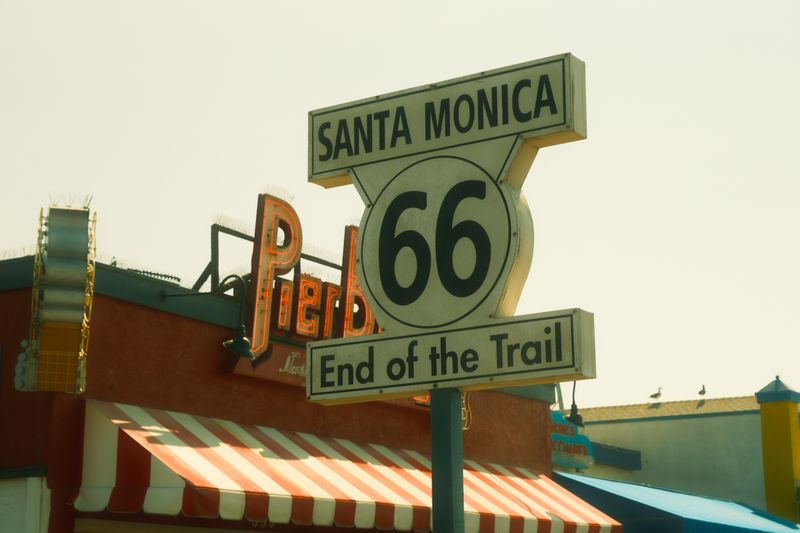 Third stop
After crossing the Mojave Desert, Route 66 symbolically ends at the Santa Monica Pier, with a sign marking the "End of the Trail" facing the ocean. It's the perfect finale: the beach, the pier's Ferris wheel and the feeling of having crossed an entire country by land.